
Plant ID Training at Scuppernong Prairie State Natural Area
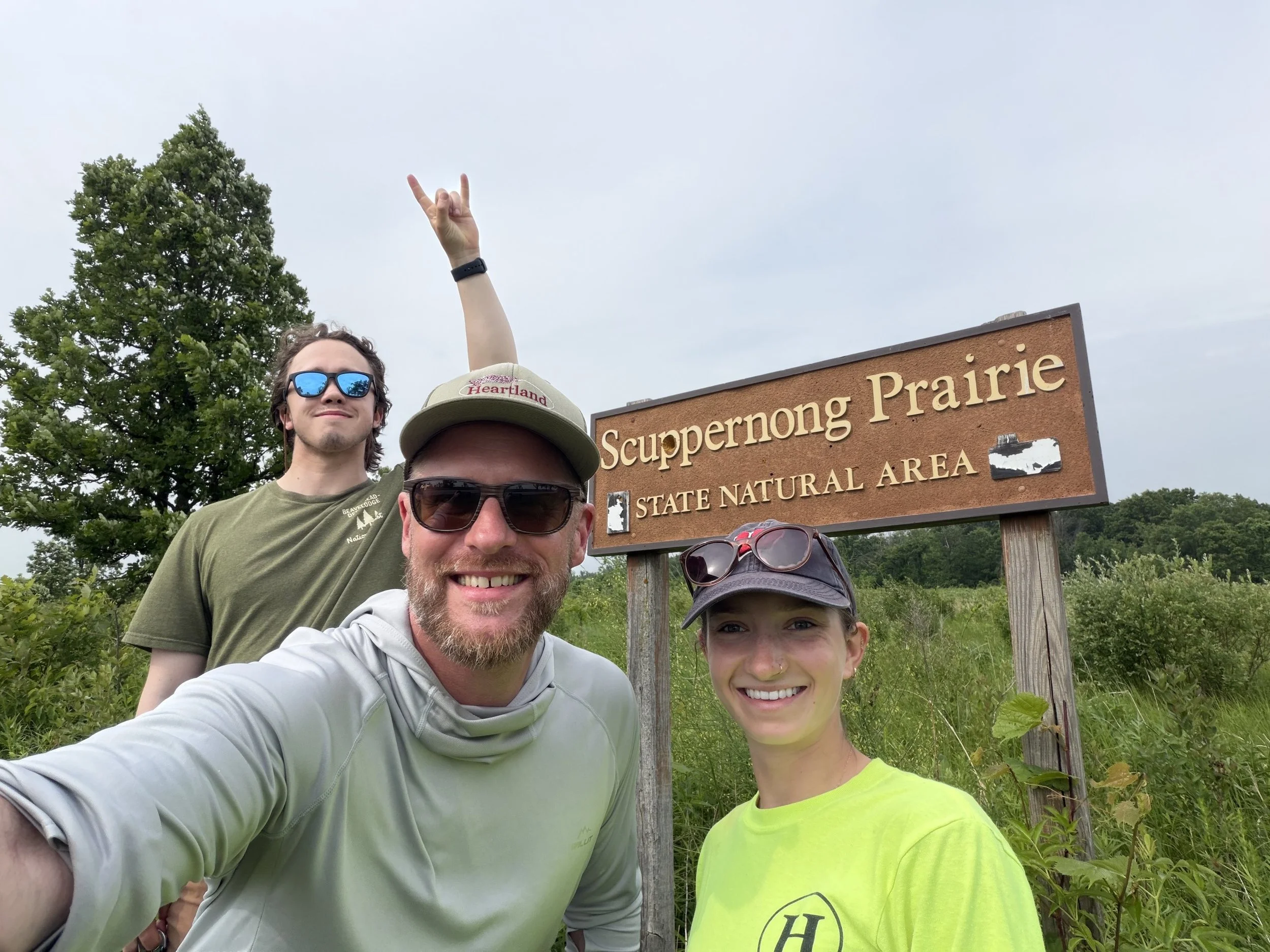
Joe, Soleil, and I took the afternoon to squeeze in a quick wetland vegetation training. We did it at Scuppernong Prairie State Natural Area just outside of Eagle in Waukesha County. Scuppernong Prairie was designated as SNA #6 in 1952 and it, along with adjacent DNR properties, supports some of the most expansive and highest quality wet-mesic prairie, fen, and wet prairie complexes east of the Mississippi R.
As such, the visit afforded us an opportunity to hit on several technical areas:
Remnant prairie ecology
Concepts of plant conservatism and natural community remnants
Ecosystem function (fire, nutrient cycling, hydrology)
Basic plant identification
Sedges vs. rushes vs. grasses
Asters vs. goldenrods vs. sunflowers
Other common species
Key morphological features for field ID
In depth plant identification
Keyed out a sedge to Carex conoidea
Common wetland Carices like C. pellita vs. C. lasiocarpa, C. stricta vs. haydenii vs. aquatilis, and C. sartwellii
Calcareous prairie and fen species like C. buxbaumii, C. conoidea, and C. sterilis; as well as other fen indicators
Common grasses
A search (albeit unsuccessful) for white lady's slipper in an area with prior confirmed population
Role of insects in plant ecology
We also did a quadrat in a high-quality portion of the wet-mesic prairie. Of the well over 20 species in the quadrat, about 42% were FACU or UPL, 33% were FACW, and the remainder were FAC. A fun lesson as it applies to borderline wetlands and in thinking about seed mix designs.
Both Joe and Soleil were great students - enthusiastic, asking questions, and taking notes. I found it really beneficial to slow down a bit outside of a project setting to get into good discussion on plant morphology and to repeat concepts as we walked through the prairies.
I look forward to continuing to support and watch Joe and Soleil strengthen their plant identification skills. Keep up the studying, ask lots of questions, and wear out those field guides!
Written By Aaron Feggestad
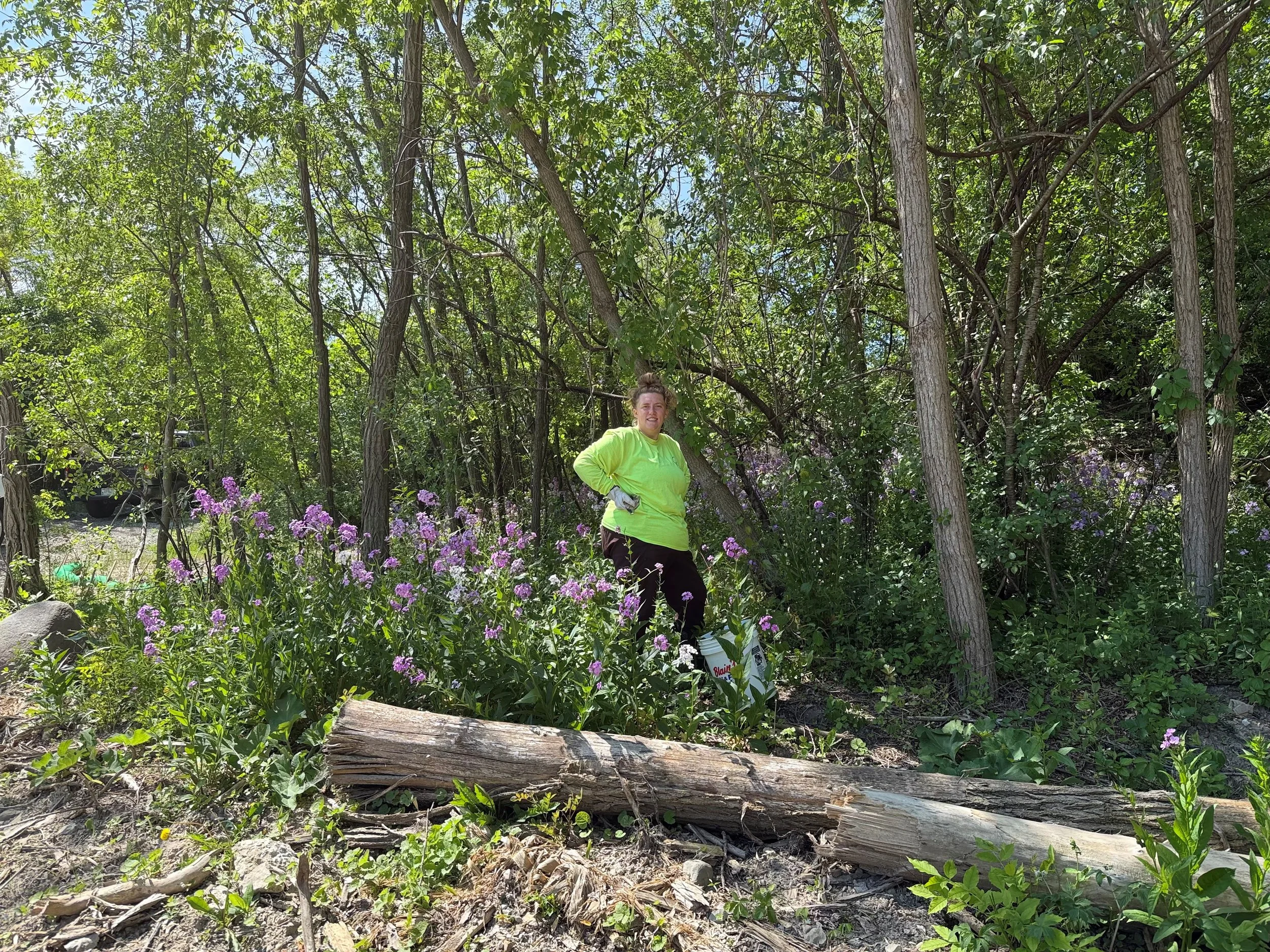
Restoration Crew Lead, Juliana Vollmer, treats dame's rocket on the edge of the restored area.